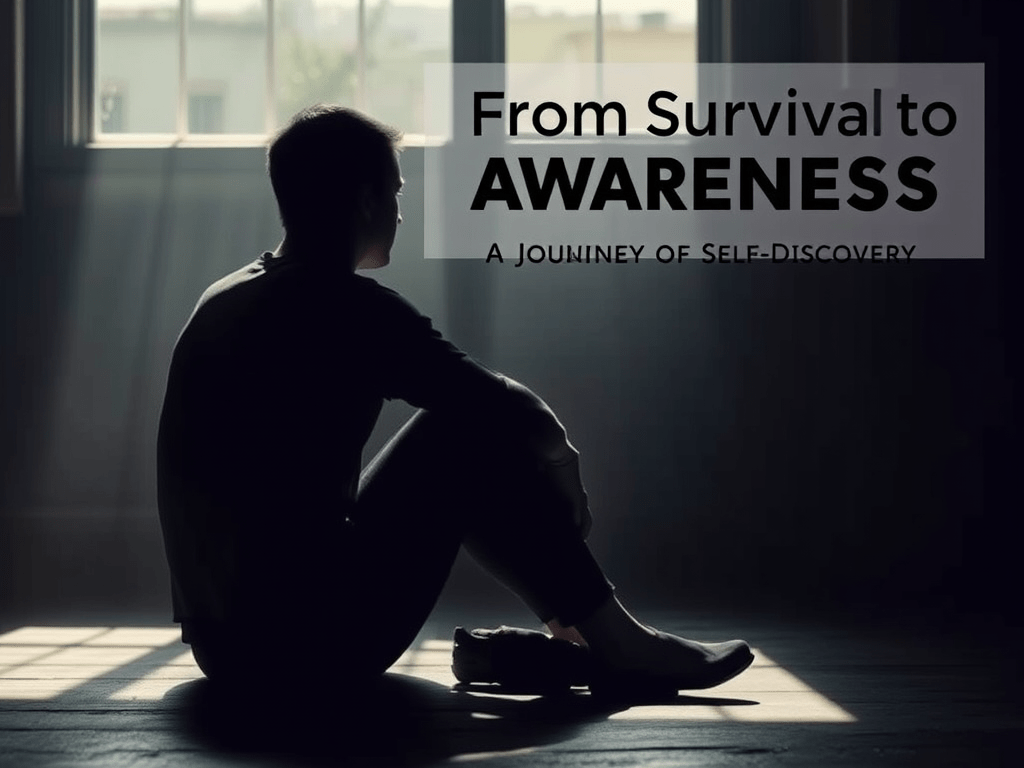
Content note: This post discusses trauma, betrayal, and the body’s response to long-term survival. Details are shared with care, but reader discretion is encouraged.
As I sit in the first week of a new year, I don’t feel celebratory.
I feel reflective. Heavy. Awake in a way that doesn’t lend itself to resolutions or fresh starts.
I don’t feel like I’m standing at an ending.
I feel like I’m standing at a point of awareness I can no longer turn away from.
What this past year brought into the light wasn’t something new—it was something I had been carrying for a very long time. Not a breakdown, but a reckoning. Not a sudden collapse, but the delayed impact of years of survival finally reaching my body.
This year didn’t change me.
It revealed me.
It revealed how long I had been holding what never should have been mine to carry. How much I had normalized pain, minimized harm, and learned to function inside systems and relationships that required my silence in order to survive.
My body didn’t suddenly give out.
It refused—after years of being overridden.
The stillness that followed wasn’t peaceful for me. It was confrontational. When everything slowed down, there was nowhere left for me to run, nowhere left to disappear into productivity or endurance. The truth rose up in my body before my mind could make sense of it.
Pain.
Panic.
Grief.
A nervous system constantly on edge.
A body that felt like it was sounding alarms I couldn’t turn off.
What came forward wasn’t new.
It was accumulated.
I experienced violations of my boundaries.
I experienced betrayal.
And I was expected to keep living as though those realities were small, when they shaped everything.
Some of the harm happened early in my life, shaping how my nervous system learned to exist in the world. But what has been most difficult to face are the betrayals that occurred in adulthood—when trust should have meant safety, and choice should have been honored.
I experienced trauma within relationships where care should have lived.
There was familiarity. Connection. Shared history. And beneath that, moments where my autonomy was not respected and my safety was not protected.
My body knew before my voice did.
It froze.
It went still.
It learned to survive in the only ways it knew how.
There is something deeply important I have come to understand.
At different points in my life, part of me believed that if I resisted less—if I didn’t fight the moment as hard—maybe the experience would hurt less. Maybe the impact wouldn’t go as deep. That belief wasn’t a choice. It was something my nervous system learned in response to fear.
I didn’t choose that response.
It emerged from survival.
When I experienced sexual trauma as a young adult, my body learned how to reduce danger in the only way it could. Years later, when I found myself in situations that activated those same survival patterns, my body responded again—not because I wanted it to, but because trauma does not forget what once kept it safe.
What has been most destabilizing is not only what happened, but that it occurred within spaces where I believed I was safe.
Survival had to coexist in me with hope.
With attachment.
With the belief that things could be repaired.
With fear about what it would mean to name what I was experiencing.
My body held the truth.
My mind tried to protect the relationships.
That internal conflict cost me more than I knew at the time.
I didn’t just experience harm.
I experienced betrayal of trust.
And betrayal doesn’t simply hurt—it reshapes you.
It teaches you to doubt your own needs.
To silence your own instincts.
To shrink yourself to maintain connection.
So I adapted.
I endured.
I minimized.
I survived.
And my body carried everything I couldn’t yet say out loud.
There is another layer I have carried for years—a quieter kind of grief.
A sense of being let go of when I needed understanding most.
When my body and mind began to struggle under the weight of everything I was carrying, I was discharged from the Navy in a way that felt efficient but not careful. The explanations I was given were vague. The support was minimal. The process felt like closure for an institution—but not clarity for a person.
I left carrying symptoms I didn’t understand, fear I couldn’t organize, and no real framework for what was happening inside my body.
There was no guidance for how to make sense of it.
No language for the connection between trauma and physical collapse.
No roadmap for how to survive once everything I had been trained to rely on disappeared.
That absence leaves a quiet mark.
It reshapes how you understand belonging.
How you understand worth.
How safe the world feels in your body.
I entered the next chapter of my life already bracing—already functioning inside a nervous system that no longer trusted stability.
Survival didn’t just shape my behavior.
It shaped my identity.
I learned who to be inside pressure.
How to function while bracing.
How to stay hyper-aware in a world that repeatedly felt unsafe.
I became adaptable.
Enduring.
Capable.
Those traits were praised.
No one asked what they cost me.
For a long time, neither did I.
Over time, chaos didn’t just feel familiar.
It became the structure my sense of self formed around.
Without it, I didn’t yet know who I was.
Right now, my physical health reflects the weight my nervous system has been carrying for years.
Chronic tension.
Migraines that last for weeks.
Digestive issues that flare without warning.
Sensitivity to sound and stimulation that overwhelms my system.
A body that locks, braces, burns, or shuts down when it perceives threat.
This isn’t weakness.
It isn’t imagination.
It isn’t my body failing me.
It is my nervous system doing exactly what it learned to do: protect me.
Over time, my world became smaller.
I canceled plans.
I avoided crowded spaces.
I structured my life around minimizing overwhelm.
I learned how to disappear quietly.
Not because I was incapable.
But because my nervous system was trying to stay safe.
There was a time when I could still experience softness in the world. When joy existed alongside pain. When I could imagine a future not entirely built around survival.
That changed.
So when I imagine a life without bracing, it doesn’t feel peaceful yet.
It feels unfamiliar.
It feels unsafe.
Not because I don’t want healing—but because the last time I trusted the world fully, it cost me deeply.
Recently, something new has entered my life.
For the first time, I am working with people who look at me and say, “What happened to you matters.”
They listen.
They validate.
They do not minimize.
And I didn’t realize how disorienting it would be to finally hear those words—not because they hurt, but because they highlighted how long I went without them.
Alongside the relief lives grief.
Grief for how long I carried this alone.
Grief that repair came so late.
Grief that I spent so much of my life believing I was the problem.
I am grateful for the support I have now.
And I am mourning the absence of it for so many years.
Both truths exist in me.
I carry anger, too.
Anger that my safety was not protected.
Anger that my body paid the price.
Anger that some people get to forget while others live with the consequences.
That anger is not bitterness.
It is recognition that what happened was not okay.
And when the anger softens, grief sits underneath it.
Grief for the child who didn’t get safety.
Grief for the young adult who learned survival strategies no one should have to learn.
Grief for the person I became who had to keep going without support.
So as this new year begins, I am not marking closure.
I am acknowledging truth.
I am staying present with what my body holds.
I am allowing my story to exist without forcing it toward resolution.
I am not healed.
But I am here.
I am aware.
And I am no longer silent.
 Healing, Glowing, and Growing - One Act of Self-Care At a Time
Leave a comment